How we find the fault
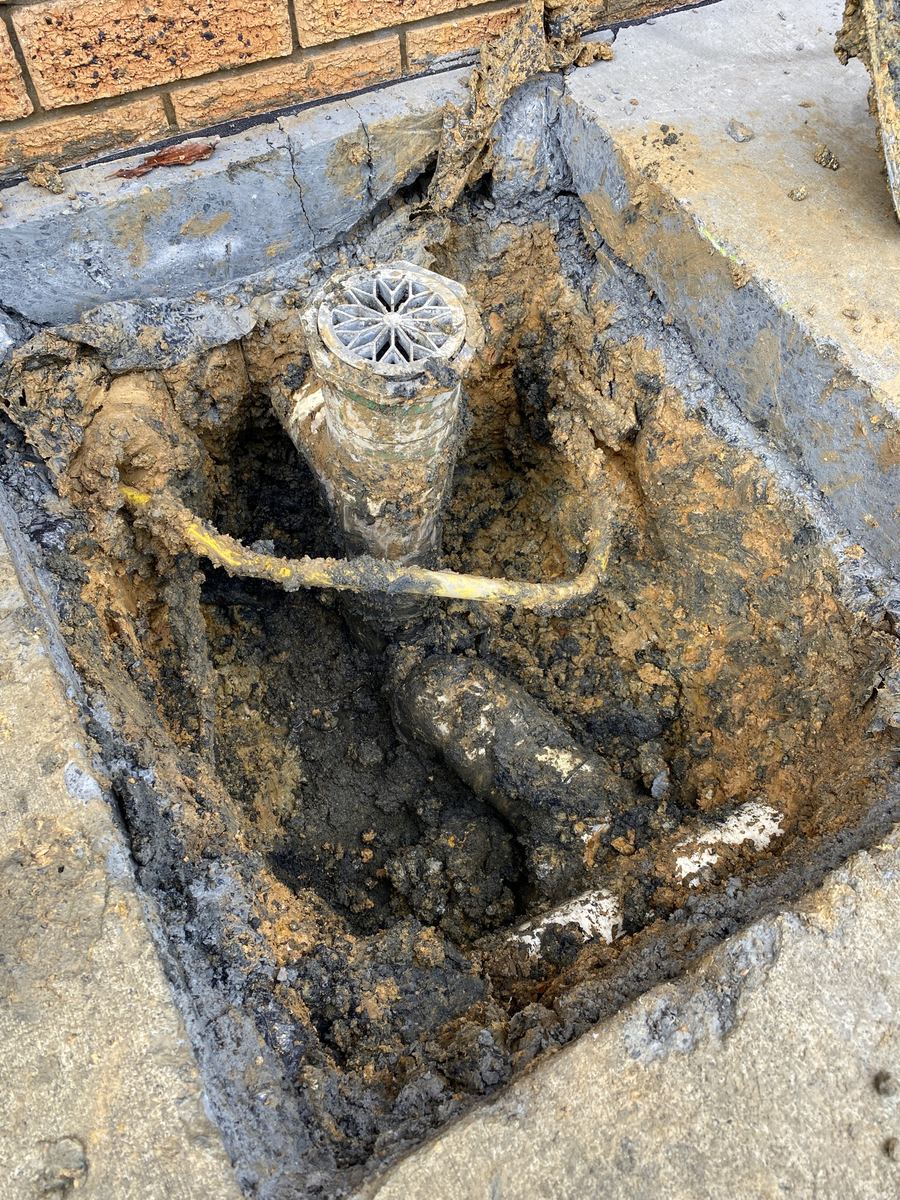
Every repair starts with a camera inspection. It shows where the pipe has failed, what failed, and how deep it sits. A locator on the surface marks the spot, so the dig goes in the right place.
Common faults
- Root intrusion. Roots enter through joints in older clay pipes and keep growing until the pipe blocks or breaks.
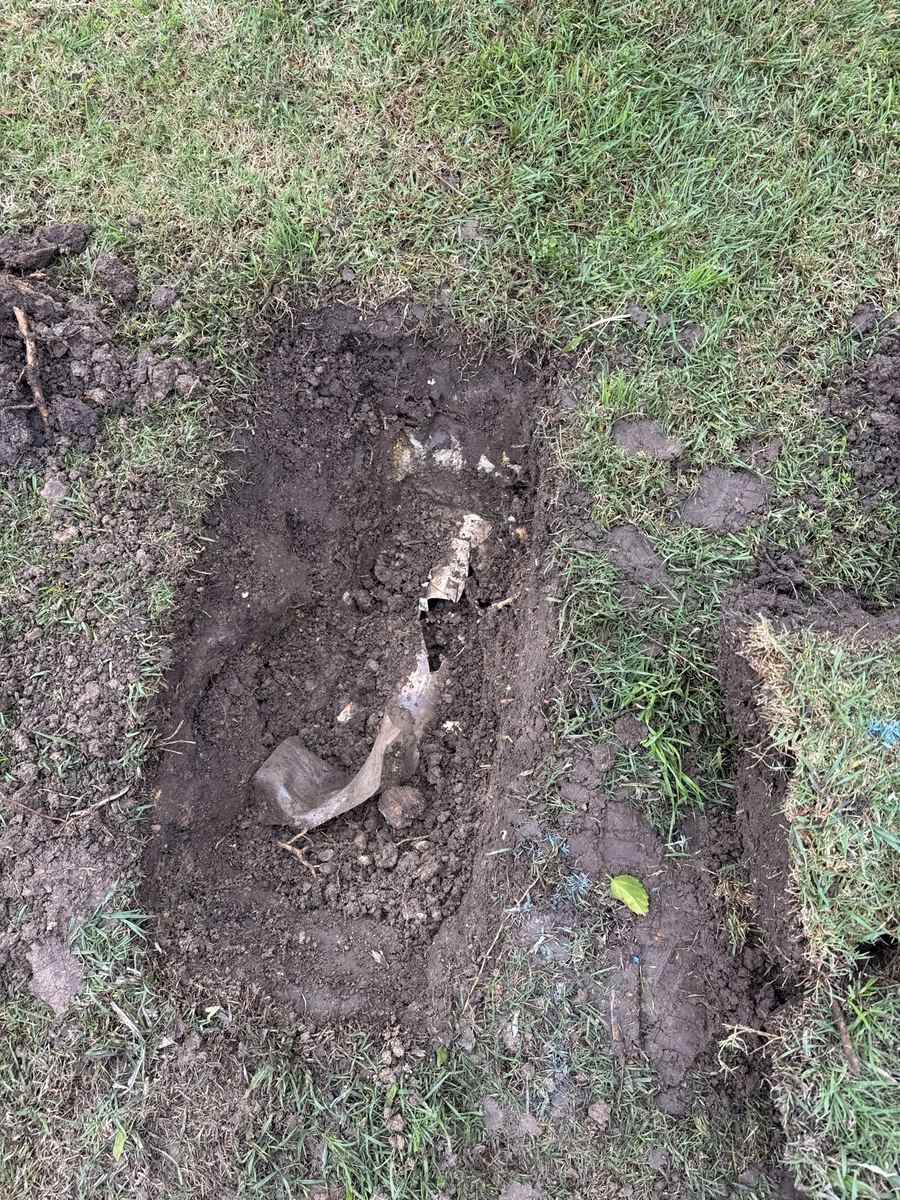
- Cracked or collapsed sections. Ground movement in reactive clay soils, heavy vehicles or age crack the pipe.
- Sags. A section drops as the ground settles, water sits in the dip and waste builds up.
- Displaced joints. Two lengths of pipe pull apart and soil and roots get in.
The repair
We dig to the damaged section, cut it out and replace it with new PVC pipe, joined to the existing line. Before backfilling, we test the line and run the camera through again. The trench is backfilled, compacted and made good.
What’s included in the quote
The quote lists the length of pipe replaced, how deep it is, what surface sits on top (lawn, garden, concrete or pavers) and how the surface is left. Work under concrete or in tight access is quoted after we’ve seen it, so there are no surprises on the day.