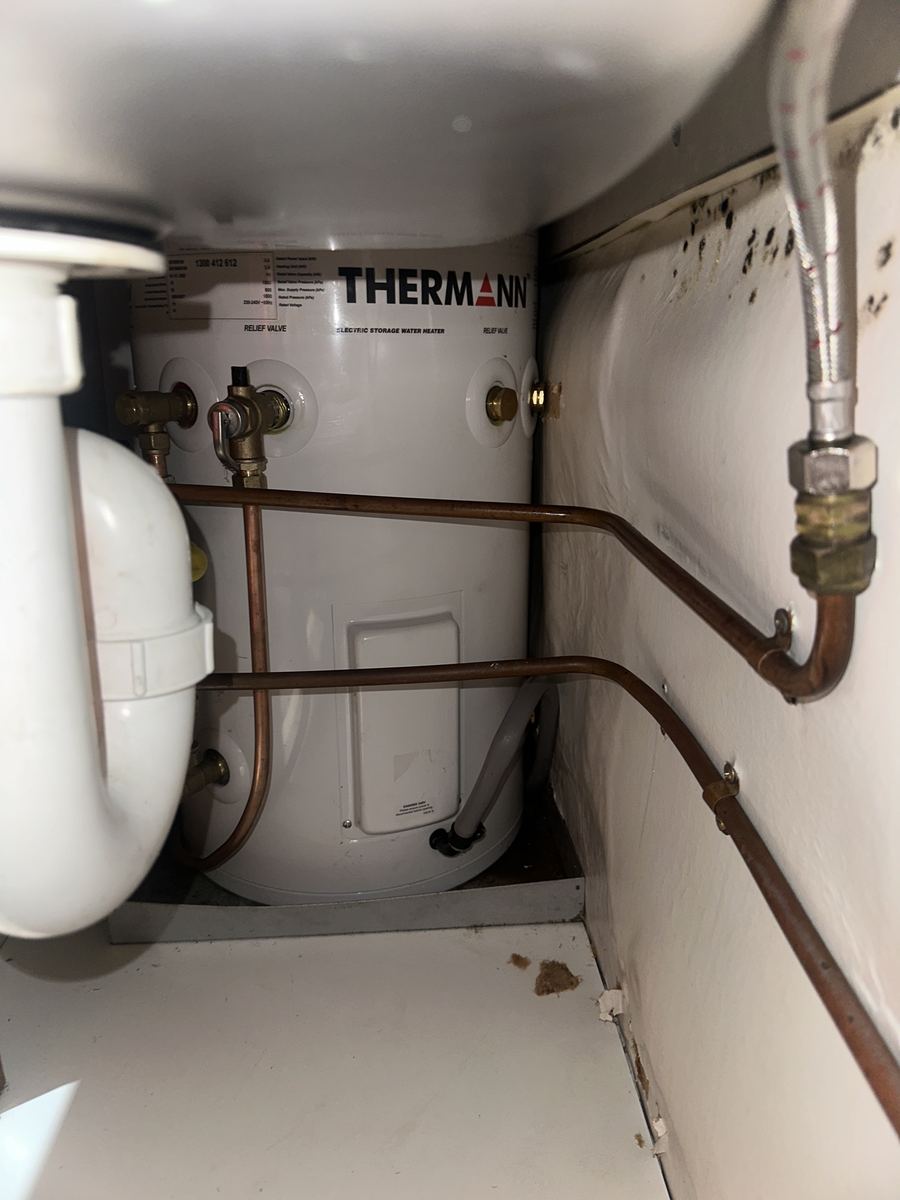
Repair or replace?
We’ll tell you straight.
- Worth repairing: a dripping pressure relief valve, a failed tempering valve, or a faulty thermostat or element on a tank that is otherwise sound.
- Time to replace: a tank leaking from the body, rust-coloured hot water, or a cylinder that has rusted through. Once the cylinder fails, it can’t be repaired.
- Worth thinking about: a tank over about ten years old that has already needed repairs.
Signs your system is on its way out
- Water pooling around the base of the tank
- Rusty or discoloured hot water
- Hot water running out much faster than it used to
- Rumbling or popping noises as it heats
- The relief valve dripping constantly
What a replacement includes
We disconnect and remove the old unit, install the new one in the same position, connect the pipework, and fit or check the tempering valve so the water at bathroom taps stays at a safe temperature. We test the system and leave it running. Moving the system, changing its size or switching to a heat pump is quoted separately after we’ve seen the site.
Electrical connection
An electric hot water system also needs its electrical connection made by a licensed electrician. The quote says how that’s handled.